




Wood conditioner balms are made with oils and natural waxes, so exposure to high heat can temporarily soften the product. This is normal for many premium wood care products. At Zesty Kitchen, products are extensively tested to improve texture stability and consistency during storage and shipping, but prolonged exposure to excessive heat — such as inside vehicles or direct sunlight — can still soften oil-and-wax-based conditioners. If softening occurs, simply allow the product to return to room temperature before use.
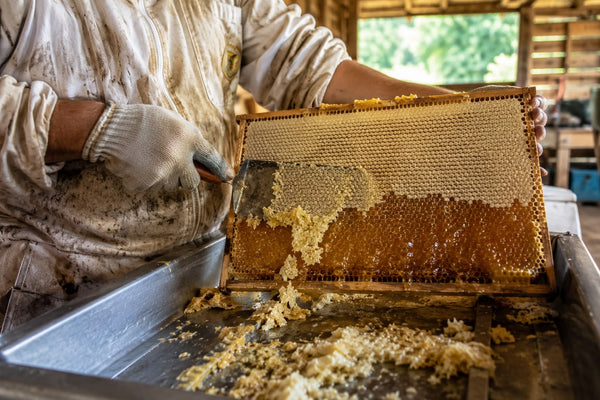
Capping wax is the fresh wax honey bees use to seal honey cells inside the hive. It is often lighter, cleaner, and more aromatic than heavily processed commercial beeswax. We appreciate capping wax not only for its quality, but also for its connection to real beekeepers and traditional hive craftsmanship.
The oil helps penetrate deep into dry hardwood fibers, while the balm helps condition and protect the surface layer. Using both together helps enhance wood appearance, reduce dryness, improve moisture resistance, and maintain a smooth natural finish.
That depends on how often the board is used and washed, as well as the climate and wood species. As a general rule, frequently used boards may benefit from conditioning every few weeks, while lightly used boards may only need occasional maintenance. If the wood begins looking dull, dry, faded, or rough, it may be time for another application.
Very dry wood can absorb large amounts of oil during initial treatments. Some hardwoods may require multiple conditioning sessions, additional absorption time, or a combination of oil and surface conditioning balm. Wood condition varies greatly depending on age, use, cleaning habits, and environment.
Yes. Zesty Kitchen Wood Care products are commonly used on butcher blocks, wooden utensils, charcuterie boards, knife handles, hardwood furniture, kitchen countertops, and many other unfinished or lightly finished hardwood surfaces. Always test a small hidden area first if unsure.
Yes. These hardwood species commonly respond very well to conditioning oils and waxes. Different woods absorb and display finishes differently, which is part of what gives natural hardwood its unique character.
Overapplication or insufficient buffing can leave excess oil on the surface. A properly conditioned surface should feel smooth, natural, and clean after buffing, not heavily oily. Allow time for absorption and remove excess product with a clean cloth.
Conditioning oils temporarily deepen and enrich the natural grain and tone of hardwood. This is normal and often desired because it highlights grain contrast, figure, and natural wood character.
Wood care products may behave differently depending on temperature, humidity, wood species, storage conditions, and usage patterns. We believe extensive testing helps us better understand consistency, texture behavior, heat stability, and real-world performance.
No. Zesty Kitchen products are developed and produced in small batches with an emphasis on refinement, consistency and craftsmanship.
Oil-and-wax-based products can react differently under extreme temperature conditions. During product development, we intentionally test batches under elevated temperatures to study texture stability, surface behavior, and long-term consistency. This testing process helps improve the final product.
Wood care designed for cutting boards and butcher blocks is intended for surfaces that may come into indirect food contact. Many traditional furniture polishes are designed for decorative furniture only and may contain ingredients not intended for kitchen preparation surfaces.
Hardwood naturally expands, contracts, and dries over time. Routine conditioning helps reduce drying, maintain appearance, support longevity, and preserve the natural beauty of the wood.
Small-batch products may show slight natural variation in color, texture, aroma, or finish appearance. This is common when working with natural waxes and oils.
Because we believe good products begin with thoughtful sourcing, careful testing, and understanding how materials behave over time. We enjoy sharing part of that journey with the people who use our products.
Yes. Most dry cutting boards can be restored with proper cleaning, conditioning, and time. Signs of a dry board include: * dull appearance * faded color * rough texture * thirsty wood fibers * small surface cracks Apply a food-safe conditioning oil to replenish moisture, then follow with a protective wood conditioner balm to help seal and protect the surface. Severely neglected boards may require sanding before conditioning.
Small surface cracks can often be repaired. The solution depends on: * crack depth * crack length * wood species * overall condition Minor cracks may improve after conditioning, while larger cracks may require sanding, glue repair, clamping, or restoration work.
Yes. Our conditioner balm is made with food-contact-safe ingredients commonly used for wooden kitchen items including cutting boards, butcher blocks, bowls, serving trays, and utensils.
Walnut and maple are both excellent cutting board woods and are cared for similarly. The biggest difference is appearance. Walnut naturally darkens with conditioning while maple develops richer golden tones.
Although bamboo is technically a grass rather than a hardwood, it still benefits from regular conditioning to help prevent drying and improve appearance.
Gray wood is often caused by: * UV exposure * oxidation * moisture cycles * lack of conditioning In many cases the original color can be restored through cleaning, conditioning, or sanding.
Fractionated Coconut Oil (MCT) is valued for its stability and lightweight feel. When used in a wood care formula, it can help improve spreadability and contribute to a smoother application experience.
Wooden utensils are exposed to frequent washing, hot water, and food acids. Because they have less mass than a cutting board, they can lose moisture more quickly and often require conditioning more frequently.
Most cooking oils are not recommended because they can oxidize and become rancid over time. Food-safe wood care products are specifically formulated to provide protection without the issues associated with many kitchen oils.
A board that absorbs oil very quickly is often extremely dry. This is common with: * newly purchased boards * neglected boards * boards exposed to dry indoor air Multiple conditioning applications may be needed before the wood becomes fully replenished.
It started as an idea for a recipe and food blog. At the time, I had no plans for wood care products, woodworking, or a restaurant. I simply wanted a name that captured food, creativity, and the kitchen experience.
I realized that opening a restaurant first would be the riskiest path. Restaurants require significant capital, carry high operating costs, and have one of the highest failure rates of any small business. Instead of starting with the most difficult pillar, I decided to build a foundation first. Wood care products gave me an opportunity to learn how to build a brand, develop products, create systems, understand marketing, and build relationships with customers. It also allowed me to generate revenue and gain real business experience before taking on the much larger challenge of opening a restaurant. Looking back, what seemed like a detour may have actually been the best path forward. The restaurant remains part of the vision, but the foundation is being built first.
No. The vision evolved over time. The original idea was much smaller. As the business grew, I realized the Zesty Kitchen name could support multiple areas that all connect back to the kitchen: caring for wood, building wood products, and eventually serving food.
Because I wanted to build trust before asking for a sale. My goal was never to create a website that simply says 'buy now.' I wanted people to learn something valuable, whether they purchase a product or not.
Accepting that I couldn't build everything at once. I had ideas for wood species databases, restoration guides, wood science articles, woodworking projects, community features, educational resources, and future products. Every week seemed to create ten new ideas. Eventually I realized that perfection was the enemy of progress. The business needed to launch before every idea was complete. The goal became building one section at a time while continuing to improve the experience every day.
Because quality ingredients start with the people who produce them. Our capping wax comes from American beekeepers and small apiaries whenever possible. Supporting local beekeepers helps strengthen pollination, agriculture, and small businesses while allowing us to source an ingredient we believe is superior to ordinary commodity wax.
Because different woods behave differently. Maple, walnut, cherry, teak, acacia, bamboo, and oak all have unique characteristics that affect how they absorb oil, respond to moisture, move with seasonal changes, and age over time. Our goal is to create a resource that helps people understand the wood they own rather than treating every wood species the same.
Because not everyone needs the same solution. The Essentials line focuses on simple, effective everyday wood care using carefully selected ingredients. The Signature line will eventually explore more specialized blends, premium oils, and advanced formulations for enthusiasts who want to dive deeper into wood care and finishing. Both serve the same purpose, but they are designed for different needs and levels of interest.
My vision is to build three connected pillars under one brand: Wood Care, Woodworking, and eventually a Filipino restaurant. The Wood Care division focuses on helping people protect and preserve the wood they already own. The Woodworking division focuses on creating handcrafted products and sharing the stories behind their creation. The Restaurant division represents the original inspiration behind the name Zesty Kitchen and the desire to share food, culture, and community. My goal is not simply to sell products. My goal is to build something meaningful that lasts for generations and creates opportunities for other people along the way.
Because I dislike them myself. When I visit a website looking for information, the last thing I want is to fight through endless popups, autoplay videos, and aggressive sales tactics. I want Zesty Kitchen to be a place where people can learn, explore, and enjoy the experience. If someone decides to purchase a product, that decision should come from trust—not pressure.
Because I believe people enjoy being part of a journey. Most companies only show the finished product. I want people to see the process, the mistakes, the lessons learned, and the growth that happens along the way. The goal is not to appear perfect. The goal is to be transparent, authentic, and allow people to follow the story as it unfolds.
STILL CURIOUS? EXPLORE DEEPER.
Every question can take you somewhere deeper.


